Horse shoe online casino


Home

Casinos

Poker

Sports Betting

Games
Time and Dates


Horseshoeonlinecasino.com


Horse Shoe Online Casino

Horseshoes are considered a good luck charm in many cultures. The shape, fabrication, placement, and manner of sourcing are all important. A common tradition is that if a horseshoe is hung on a door with the two ends pointing up then good luck will occur. However, if the two ends point downwards then bad luck will occur. Traditions do differ on this point, though. In some cultures, the horseshoe is hung points down (so the luck pours onto you); in others, it is hung points up (so the luck doesn't fall out); still in others it doesn't matter so long as the horseshoe has been used (not new), was found (not purchased), and can be touched. In all traditions, luck is contained in the shoe and can pour out through the ends.

In some traditions, any good or bad luck achieved will only occur to the owner of the horseshoe, not the person who hangs it up. Therefore, if the horseshoe was stolen, borrowed or even just found then the owner, not the person who found or stole the horseshoe will get any good or bad luck. Other traditions require that the horseshoe be found to be effective.

Some believe that if guests come to a house where a horseshoe is above the door, they must leave by the same door through which they entered or they will take the luck from the horseshoe with them from the house.

Another theory concerning the placing of horseshoes above doorways is to ward off Faeries; the theory being that Faeries are repelled by iron and as horseshoes were an easily available source of iron, they could be nailed above a door to prevent any unwanted, otherworldly guests. One can see how the custom, as people began to forget the stories concerning the Fair Folk, eventually morphed into a simple good luck charm.

Gambling is the wagering of money or something of material value on an event with an uncertain outcome with the primary intent of winning additional money and/or material goods. Typically, the outcome of the wager is evident within a short period.

Gambling variables
There are three variables common to all forms of gambling:

How much is being wagered, the initial stake (in money or material goods).
The predictability of the event.
In mechanical or electronic gambling such as lotteries, slot machines and bingo, the results are random and unpredictable; no amount of skill or knowledge (assuming machinery is functioning as intended) can give an advantage in predictability to anyone.
However, for sports events such as horse racing and soccer matches there is some predictability to the outcome; thus a person with greater knowledge and/or skill will have an advantage over others.
The odds agreed between the two (or more) parties to the wager; where there is a house or a bookmaker, the odds are (quite legally) arranged in favor of the house.
The expected value, positive or negative, is a mathematical calculation using these three variables. The amount wagered determines the scale of an individual wager (bet); the odds and the amount wagered determine the payout if successful; the predictability determines the frequency of success. Finally the frequency of success times the payout minus the amount wagered equals the "expected value" The skill of a gambler lies in understanding and maneuvering the three variables so that the "actual value" is positive over a series of wagers.


Fixed-odds gambling and Parimutuel betting frequently occur at many types of sporting events, and political elections. In addition many bookmakers offer fixed odds on a number of non-sports related outcomes, for example the direction and extent of movement of various financial indices, the winner of television competitions such as Big Brother, and election results.[8] Interactive prediction markets also offer trading on these outcomes, with "shares" of results trading on an open market.

Parimutuel betting

One of the most widespread forms of gambling involves betting on horse or greyhound racing. Wagering may take place through parimutuel pools, or bookmakers may take bets personally. Parimutuel wagers pay off at prices determined by support in the wagering pools, while bookmakers pay off either at the odds offered at the time of accepting the bet; or at the median odds offered by track bookmakers at the time the race started.

Sports betting is the general activity of predicting sports results by making a wager on the outcome of a sporting event. Perhaps more so than other forms of gambling, the legality and general acceptance of sports betting varies from nation to nation. In the United States, the Professional and Amateur Sports Protection Act of 1994 makes illegal to operate a "betting, gambling or wagering scheme", except for in the states of Delaware, Nevada, and Oregon. Nevada, however, is the only state currently allowing sports gambling, while in many European nations bookmaking (the profession of accepting sports wagers) is highly regulated but not criminalized. Proponents of legalized sports betting generally regard it as a hobby for sports fans that increases their interest in particular sporting events, thus benefiting the leagues, teams and players they bet on through higher attendances and television audiences. Opponents fear that, over and above the general ramifications of gambling, it threatens the integrity of amateur and professional sport, the history of which includes numerous attempts by sports gamblers to fix matches, although proponents counter that legitimate bookmakers will invariably fight corruption just as fiercely as governing bodies and law enforcement do. Most sports bettors are overall losers as the bookmakers odds are fairly efficient. However, there are professional sports bettors that make a good income betting sports.

Arbitrage betting is a theoretically risk-free betting system in which every outcome of an event is bet upon so that a known profit will be made by the bettor upon completion of the event, regardless of the outcome. Arbitrage betting is a combination of the ancient art of arbitrage trading and gambling, which has been made possible by the large numbers of bookmakers in the marketplace, creating occasional opportunities for arbitrage.

One can also bet with another person that a statement is true or false, or that a specified event will happen (a "back bet") or will not happen (a "lay bet") within a specified time. This occurs in particular when two people have opposing but strongly-held views on truth or events. Not only do the parties hope to gain from the bet, they place the bet also to demonstrate their certainty about the issue. Some means of determining the issue at stake must exist. Sometimes the amount bet remains nominal, demonstrating the outcome as one of principle rather than of financial importance.

Betting exchanges allow consumers to both back and lay at odds of their choice. Similar in some ways to a stock exchange, a better may want to back a horse (hoping it will win) or lay a horse (hoping it will lose, effectively acting as bookmaker)


Many betting systems have been created in an attempt to "beat the bookie" but most still accept that no system can make an unprofitable bet profitable over time. Widely-used systems include:

Card counting - Many systems exist for Blackjack to keep track of the ratio of ten values to all others; when this ratio is high the player has an advantage and should increase the amount of their bets. Keeping track of cards dealt confers an advantage in other games as well.
Due-column betting – A variation on fixed profits betting in which the bettor sets a target profit and then calculates a bet size that will make this profit, adding any losses to the target.
Fixed profits – the stakes vary based on the odds to ensure the same profit from each winning selection.
Fixed stakes – a traditional system of staking the same amount on each selection.
Kelly – the optimum level to bet to maximize your future median bank level.
Martingale – A system based on staking enough each time to recover losses from previous bet(s) until one wins.
Pot odds vs. true odds - In poker, the ratio of the size of the current pot to the bet a player is considering is called "pot odds", which can be compared to the "true odds" of a player completing a winning hand from the cards remaining to be dealt to determine whether to make the bet.

Many risk-return choices are sometimes referred to colloquially as "gambling." Whether this terminology is acceptable is a matter of debate, but generally the following activities are not considered gambling:

Emotional or physical risk-taking, where the risk-return ratio is not quantifiable (e.g., skydiving, campaigning for political office, asking someone for a date, etc.)
Insurance is a method of shifting risk from one party to another. Insurers use actuarial methods to calculate appropriate premiums, which could be considered similar to calculating gambling odds. However, insurers can set their premiums to obtain a long term positive expected return.
Situations where the possible return is a secondary reason for the wager/purchase (e.g. buying a raffle ticket to support a charitable cause)
Investments are also usually not considered gambling, although some investments can involve significant risk. Examples of investments include stocks, bonds and real estate. Starting a business can also be considered a form of investment. Investments are generally not considered gambling when they meet the following criteria:


Experiments, events, probability spaces
The technical processes of a game stand for experiments that generate aleatory events.
Throwing the dice in craps is an experiment that generates events such as occurrences of certain numbers on the dice, obtaining a certain sum of the shown numbers, obtaining numbers with certain properties (less than a specific number, higher that a specific number, even, uneven, and so on). The sample space of such an experiment is {1, 2, 3, 4, 5, 6} for rolling one die or {(1, 1), (1, 2), ..., (1, 6), (2, 1), (2, 2), ..., (2, 6), ..., (6, 1), (6, 2), ..., (6, 6)} for rolling two dice. The latter is a set of ordered pairs and counts 6 x 6 = 36 elements. The events can be identified with sets, namely parts of the sample space. For example, the event occurrence of an even number is represented by the following set in the experiment of rolling one die: {2, 4, 6}.
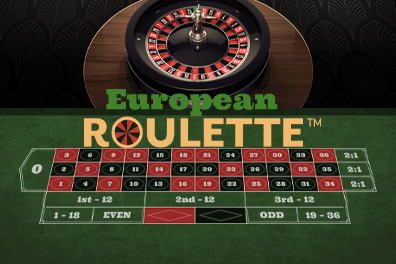
Spinning the roulette wheel is an experiment whose generated events could be the occurrence of a certain number, of a certain color or a certain property of the numbers (low, high, even, uneven, from a certain row or column, and so on). The sample space of the experiment involving spinning the roulette wheel is the set of numbers the roulette holds: {1, 2, 3, ..., 36, 0, 00} for the American roulette, or {1, 2, 3, ..., 36, 0} for the European. The event occurrence of a red number is represented by the set {1, 3, 5, 7, 9, 12, 14, 16, 18, 19, 21, 23, 25, 27, 30, 32, 34, 36}. These are the numbers inscribed in red on the roulette wheel and table.
Dealing cards in blackjack is an experiment that generates events such as the occurrence of a certain card or value as the first card dealt, obtaining a certain total of points from the first two cards dealt, exceeding 21 points from the first three cards dealt, and so on. In card games we encounter many types of experiments and categories of events. Each type of experiment has its own sample space. For example, the experiment of dealing the first card to the first player has as its sample space the set of all 52 cards (or 104, if played with two decks). The experiment of dealing the second card to the first player has as its sample space the set of all 52 cards (or 104), less the first card dealt. The experiment of dealing the first two cards to the first player has as its sample space a set of ordered pairs, namely all the 2-size arrangements of cards from the 52 (or 104). In a game with one player, the event the player is dealt a card of 10 points as the first dealt card is represented by the set of cards {10♠, 10♣, 10♥, 10♦, J♠, J♣, J♥, J♦, Q♠, Q♣, Q♥, Q♦, K♠, K♣, K♥, K♦}. The event the player is dealt a total of five points from the first two dealt cards is represented by the set of 2-size combinations of card values {(A, 4), (2, 3)}, which in fact counts 4 x 4 + 4 x 4 = 32 combinations of cards (as value and symbol).
In 6/49 lottery, the experiment of drawing six numbers from the 49 generate events such as drawing six specific numbers, drawing five numbers from six specific numbers, drawing four numbers from six specific numbers, drawing at least one number from a certain group of numbers, etc. The sample space here is the set of all 6-size combinations of numbers from the 49.
In draw poker, the experiment of dealing the initial five card hands generates events such as dealing at least one certain card to a specific player, dealing a pair to at least two players, dealing four identical symbols to at least one player, and so on. The sample space in this case is the set of all 5-card combinations from the 52 (or the deck used).
Dealing two cards to a player who has discarded two cards is another experiment whose sample space is now the set of all 2-card combinations from the 52, less the cards seen by the observer who solves the probability problem. For example, if you are in play in the above situation and want to figure out some odds regarding your hand, the sample space you should consider is the set of all 2-card combinations from the 52, less the three cards you hold and less the two cards you discarded. This sample space counts the 2-size combinations from 47.

Events related to your own play or to opponents’ play;
Events related to one person’s play or to several persons’ play;
Immediate events or long-shot events.
Each category can be further divided into several other subcategories, depending on the game referred to. These events can be literally defined, but it must be done very carefully when framing a probability problem. From a mathematical point of view, the events are nothing more than subsets and the space of events is a Boolean algebra. Among these events, we find elementary and compound events, exclusive and nonexclusive events, and independent and non-independent events.

In the experiment of rolling a die:

Event {3, 5} (whose literal definition is occurrence of 3 or 5) is compound because {3, 5}= {3} U {5};
Events {1}, {2}, {3}, {4}, {5}, {6} are elementary;
Events {3, 5} and {4} are incompatible or exclusive because their intersection is empty; that is, they cannot occur simultaneously;
Events {1, 2, 5} and {2, 5} are nonexclusive, because their intersection is not empty;
In the experiment of rolling two dice one after another, the events obtaining 3 on the first die and obtaining 5 on the second die are independent because the occurrence of the second event is not influenced by the occurrence of the first, and vice versa.
In the experiment of dealing the pocket cards in Texas Hold’em Poker:

The event of dealing (3♣, 3♦) to a player is an elementary event;
The event of dealing two 3’s to a player is compound because is the union of events (3♣, 3♠), (3♣, 3♥), (3♣, 3♦), (3♠, 3♥), (3♠, 3♦) and (3♥, 3♦);
The events player 1 is dealt a pair of kings and player 2 is dealt a pair of kings are nonexclusive (they can both occur);
The events player 1 is dealt two connectors of hearts higher than J and player 2 is dealt two connectors of hearts higher than J are exclusive (only one can occur);
The events player 1 is dealt (7, K) and player 2 is dealt (4, Q) are non-independent (the occurrence of the second depends on the occurrence of the first, while the same deck is in use).
These are a few examples of gambling events, whose properties of compoundness, exclusiveness and independency are easily observable. These properties are very important in practical probability calculus.

The complete mathematical model is given by the probability field attached to the experiment, which is the triple sample space—field of events—probability function. For any game of chance, the probability model is of the simplest type—the sample space is finite, the space of events is the set of parts of the sample space, implicitly finite, too, and the probability function is given by the definition of probability on a finite space of events:

Games of chance are also good examples of combinations, permutations and arrangements, which are met at every step: combinations of cards in a player’s hand, on the table or expected in any card game; combinations of numbers when rolling several dice once; combinations of numbers in lottery and bingo; combinations of symbols in slots; permutations and arrangements in a race to be bet on, and the like. Combinatorial calculus is an important part of gambling probability applications. In games of chance, most of the gambling probability calculus in which we use the classical definition of probability reverts to counting combinations. The gaming events can be identified with sets, which often are sets of combinations. Thus, we can identify an event with a combination.
For example, in a five draw poker game, the event at least one player holds a four of a kind formation can be identified with the set of all combinations of (xxxxy) type, where x and y are distinct values of cards. This set has 13C(4,4)(52-4)=624 combinations. Possible combinations are (3♠ 3♣ 3♥ 3♦ J♣) or (7♠ 7♣ 7♥ 7♦ 2♣). These can be identified with elementary events that the event to be measured consists of.

Games of chance are not merely pure applications of probability calculus and gaming situations are not just isolated events whose numerical probability is well established through mathematical methods; they are also games whose progress is influenced by human action. In gambling, the human element has a striking character. The player is not only interested in the mathematical probability of the various gaming events, but he or she has expectations from the games while a major interaction exists. To obtain favorable results from this interaction, gamblers take into account all possible information, including statistics, to build gaming strategies. The predicted future gain or loss is called expectation or expected value and is the sum of the probability of each possible outcome of the experiment multiplied by its payoff (value). Thus, it represents the average amount one expects to win per bet if bets with identical odds are repeated many times. A game or situation in which the expected value for the player is zero (no net gain nor loss) is called a fair game. The attribute fair refers not to the technical process of the game, but to the chance balance house (bank)–player.
Even though the randomness inherent in games of chance would seem to ensure their fairness (at least with respect to the players around a table—shuffling a deck or spinning a wheel do not favor any player except if they are fraudulent), gamblers always search and wait for irregularities in this randomness that will allow them to win. It has been mathematically proved that, in ideal conditions of randomness, no long-run regular winning is possible for players of games of chance. Most gamblers accept this premise, but still work on strategies to make them win over the long run.

The house edge (HE) or vigorish is defined as the casino profit expressed as a percentage of the player's original bet. (In games such as Blackjack or Spanish 21, the final bet may be several times the original bet, if the player double and splits.)

Example: In American Roulette, there are two zeroes and 36 non-zero numbers (18 red and 18 black). If a player bets $1 on red, his chance of winning $1 is therefore 18/38 and his chance of losing $1 (or winning -$1) is 20/38.

The player's expected value, EV = (18/38 x 1) + (20/38 x -1) = 18/38 - 20/38 = -2/38 = -5.26%. Therefore, the house edge is 5.26%. After 10 rounds, play $1 per round, the average house profit will be 10 x $1 x 5.26% = $0.53. Of course, it is not possible for the casino to win exactly 53 cents; this figure is the average casino profit from each player if it had millions of players each betting 10 rounds at $1 per round.

The house edge of casino games vary greatly with the game. Keno can have house edges up to 25%, slot machines can have up to 15%, while most Australian Pontoon games have house edges between 0.3% and 0.4%.

The calculation of the Roulette house edge was a trivial exercise; for other games, this is not usually the case. Combinatorial analysis and/or computer simulation is necessary to complete the task.

In games which have a skill element, such as Blackjack or Spanish 21, the house edge is defined as the house advantage from optimal play (without the use of advanced techniques such as card counting), on the first hand of the shoe (the container that holds the cards). The set of the optimal plays for all possible hands is known as "basic strategy" and is highly dependent on the specific rules, and even the number of decks used. Good Blackjack and Spanish 21 games have house edges below 0.5%.

The luck factor in a casino game is quantified using standard deviation (SD). The standard deviation of a simple game like Roulette can be calculated using the binomial distribution. In the binomial distribution, SD = sqrt (npq ), where n = number of rounds played, p = probability of winning, and q = probability of losing. The binomial distribution assumes a result of 1 unit for a win, and 0 units for a loss, rather than -1 units for a loss, which doubles the range of possible outcomes. Furthermore, if we flat bet at 10 units per round instead of 1 unit, the range of possible outcomes increases 10 fold. Therefore,

SD (Roulette, even-money bet) = 2b sqrt(npq ), where b = flat bet per round, n = number of rounds, p = 18/38, and q = 20/38.

For example, after 10 rounds at $1 per round, the standard deviation will be 2 x 1 x sqrt(10 x 18/38 x 20/38) = $3.16. After 10 rounds, the expected loss will be 10 x $1 x 5.26% = $0.53. As you can see, standard deviation is many times the magnitude of the expected loss.

The range is six times the standard deviation: three above the mean, and three below. Therefore, after 10 rounds betting $1 per round, your result will be somewhere between -$0.53 - 3 x $3.16 and -$0.53 + 3 x $3.16, i.e., between -$10.01 and $8.95. (There is still a 0.1% chance that your result will exceed a $8.95 profit, and a 0.1% chance that you will lose more than $10.01.) This demonstrates how luck can be quantified; we know that if we walk into a casino and bet $5 per round for a whole night, we are not going to walk out with $500.

The standard deviation for the even-money Roulette bet is the lowest out of all casinos games. Most games, particularly slots, have extremely high standard deviations. As the size of the potential payouts increase, so does the standard deviation.

As the number of rounds increases, eventually, the expected loss will exceed the standard deviation, many times over. From the formula, we can see the standard deviation is proportional to the square root of the number of rounds played, while the expected loss is proportional to the number of rounds played. As the number of rounds increases, the expected loss increases at a much faster rate. This is why it is impossible for a gambler to win in the long term. It is the high ratio of short-term standard deviation to expected loss that fools gamblers into thinking that they can win.

The volatility index (VI) is defined as the standard deviation for one round, betting one unit. Therefore, the VI for the even-money American Roulette bet is sqrt(18/38 x 20/38) = 0.499. The variance (v) is defined as the square of the VI. Therefore, the variance of the even-money American Roulette bet is 0.249, which is extremely low for a casino game. The variance for Blackjack is 1.2, which is still low compared to the variances of electronic gaming machines (EGMs).

It is important for a casino to know both the house edge and volatility index for all of their games. The house edge tells them what kind of profit they will make as percentage of turnover, and the volatility index tells them how much they need in the way of cash reserves. The mathematicians and computer programmers that do this kind of work are called gaming mathematicians and gaming analysts. Casinos do not have in-house expertise in this field, so outsource their requirements to experts in the gaming analysis field, such as Mike Shackleford, the "Wizard of Odds".


roulette


free video poker


online casino bonus


no deposit casino

Horseshoeonlinecasino.com